

I don’t know about you, but I spend way too much time staring at my desk. If I’m going to clock hours sitting in one spot, I need that spot to feel alive and welcoming. That’s where greenery comes in. Bringing life to your desk isn’t just about aesthetics; studies show plants can actually boost productivity and reduce stress—plus, they just look cool.
- Key Takeaways for Your Green Desk Success
- Comparison Table: Finding Your Perfect Desk Companion
- ZZ Plant (Zamioculcas zamiifolia)
- Snake Plant (Sansevieria / Dracaena trifasciata): One of the Best Desk Plants for Air Quality
- Pothos (Epipremnum aureum)
- Spider Plant (Chlorophytum comosum)
- Peace Lily (Spathiphyllum)
- Final Thoughts on the Best Desk Plants
- Desk Plant FAQs
The problem is, office environments are notoriously harsh. We’re talking fluorescent lights, dry air, weekend neglect, and zero natural sun exposure in many cubicles. You need plants that can handle the abuse. I’ve personally nursed—and accidentally murdered—dozens of houseplants over the years, and I’ve narrowed down this list to five absolute champions that thrive on neglect. You’ll love how little effort these require.
Key Takeaways for Your Green Desk Success
- For the Dark Cubicle: The ZZ Plant (Index 0) and the Snake Plant (Index 1) are truly the MVPs for low light conditions.
- For Pet Owners: The Spider Plant (Index 3) is non-toxic, making it the safest choice for homes with curious pets or small kids.
- For Fast Results: Pothos (Index 2) is incredibly fast-growing, giving you that jungle vibe almost immediately.
- Pro Tip: Most desk plants die from overwatering, not underwatering. When in doubt, wait a few extra days!
Comparison Table: Finding Your Perfect Desk Companion
| Plant | Light Needs | Watering Frequency | Toxicity (Pets/Kids) | Difficulty |
|---|---|---|---|---|
| ZZ Plant | Low to Bright Indirect | Very Infrequent (Monthly) | Toxic | Super Easy |
| Snake Plant | Low to Bright Indirect | Infrequent (Every 2-3 Weeks) | Mildly Toxic | Super Easy |
| Pothos | Low to Medium Indirect | Weekly to Bi-Weekly | Toxic | Easy |
| Spider Plant | Medium to Bright Indirect | Weekly | Non-Toxic | Easy |
| Peace Lily | Medium to Low Indirect | Weekly (Very demanding) | Mildly Toxic | Medium |
ZZ Plant (Zamioculcas zamiifolia)

Mini Review
If you travel often, work long hours, or are generally known as a serial plant killer, meet your new best friend. The ZZ Plant is truly the closest thing you can get to an artificial plant without actually buying plastic. It stores water in its rhizomes (underground bulb-like structures), meaning it can handle drought like a champ. I’ve had one sitting in a windowless hallway for two months and it looked perfectly fine. The leaves are glossy and dark green, giving it a high-end, modern look.
Who It’s For: People who forget they own plants, dark cubicles, and beginners who want zero stress.
Pros: Unbeatable low-light tolerance, drought-proof, incredibly sculptural look.
Cons: Extremely slow grower, toxic if ingested (keep away from curious chewers).
Snake Plant (Sansevieria / Dracaena trifasciata): One of the Best Desk Plants for Air Quality

Mini Review
The Snake Plant is another incredible champion of neglect, right alongside the ZZ Plant. It requires almost the exact same care routine, meaning you can ignore it for weeks at a time. What sets it apart is its shape. The vertical, sword-like leaves are perfect for small desks because they take up vertical space rather than horizontal space. They make a great architectural statement without cluttering your keyboard area.
My first experience with a Snake Plant was in a tiny, interior city apartment. It was the only thing that seemed happy tucked into a dark corner next to my desk lamp. It didn’t grow much, but it never withered either. Plus, NASA famously listed it as a great air purifier!
Who It’s For: Small desks, minimalists, and anyone who wants a plant rumored to clean indoor air.
Pros: Extremely durable, upright structure saves space, fantastic air filtration reputation.
Cons: Blades can be sharp, can suffer from root rot if overwatered.
Pothos (Epipremnum aureum)
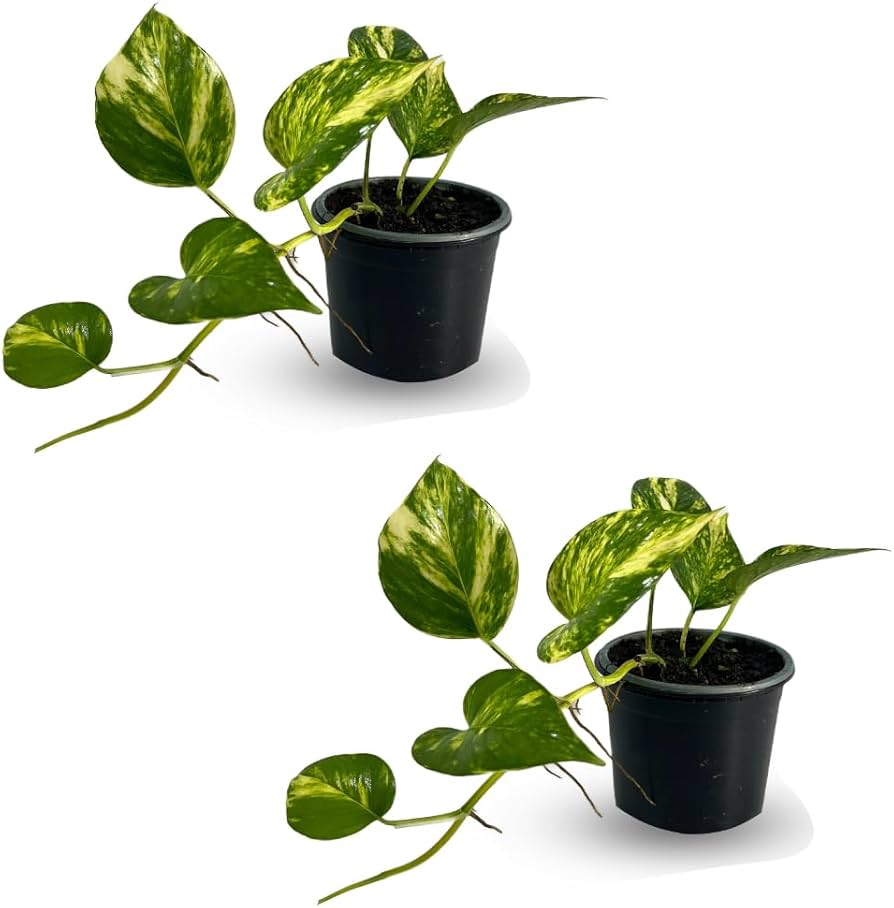
Mini Review
If you want a classic trailing vine that screams “jungle vibes,” Pothos is your go-to. This plant is forgiving, adaptable, and grows at warp speed. Unlike the slow-moving ZZ, the Pothos gives you the instant gratification of seeing new growth almost weekly. You can let it trail down the side of your desk, or train it up a little trellis or wire behind your monitors.
I love keeping a small Pothos cutting in a jar of water on my windowsill; it can literally grow roots and live happily in just water for months. That makes propagation super easy, so when your coworker compliments your greenery, you can just snip off a piece and make them one too! Just be aware that this one is highly toxic if chewed, so place it high up if pets or toddlers are around.
Who It’s For: Anyone wanting dramatic trailing growth, those with high shelves, and people who enjoy sharing plant cuttings.
Pros: Exceptionally resilient, tolerates low light, extremely fast growth.
Cons: Needs regular trimming to stay tidy, toxic.
Spider Plant (Chlorophytum comosum)

Mini Review
If you have pets—especially cats that might bat at or nibble on leaves—you need the Spider Plant. This is one of the very few popular houseplants that is non-toxic to cats and dogs (though they still shouldn’t eat mouthfuls of it!). It’s a throwback classic, recognizable by its arching, striped leaves and its delightful habit of producing “spiderettes” or plant babies that dangle down.
Spider Plants do prefer a bit more light than the ZZ or Snake Plant, so try to keep it within a few feet of a window, or under bright office lighting. They’re super easy to water; when the leaves start looking dull or pale, give it a good soak. You can easily repot those dangling babies into small pots and hand them out to your team!
Who It’s For: Pet owners, those who love sharing plants, and folks needing a hanging option.
Pros: Non-toxic and safe for pets, easy to propagate, excellent air purification qualities.
Cons: Can get brown tips if watered with fluoridated tap water (use filtered water if you notice this), needs consistent watering.
Peace Lily (Spathiphyllum)

Mini Review
The Peace Lily is the only plant on this list that will reward you with actual flowers—beautiful, boat-shaped white blooms. While it’s still relatively low-maintenance, it does require a bit more attention than the desert-dwelling ZZ and Snake plants. Why? Because the Peace Lily is the ultimate drama queen.
When it needs water, it doesn’t just look a little droopy; the entire plant collapses in a heap of green despair. It looks horrifying! But don’t panic—it’s actually a wonderful feature. It tells you exactly when it’s thirsty. Give it a good drink, and within an hour, it will stand back up like nothing happened. If you need a clear visual cue for watering, this is your plant.
Who It’s For: People who enjoy flowers indoors, and those who need a dramatic, clear indicator for when to water.
Pros: Produces striking white flowers, thrives in lower light, clear watering signal (the dramatic droop).
Cons: Needs more consistent watering than other low-maintenance options, leaves are mildly toxic.
Final Thoughts on the Best Desk Plants
Choosing the best desk plants truly comes down to understanding your environment. If you’re tucked away in the deepest, darkest corner of the office, you should definitely start with the ZZ or the Snake Plant—they are simply unbeatable when it comes to low-light survival. If you have a slightly brighter spot and want a trailing aesthetic, the Pothos is the easiest choice.
No matter which you choose, remember that the main goal of adding greenery is to bring some calm and color to your workday. Just adding a tiny touch of life to your workspace can make a massive difference in how you feel when you sit down for the day. Happy planting!
Desk Plant FAQs
Q: How often should I water a plant that is sitting under only fluorescent light?
A: When light is extremely low (fluorescent only), plants use water very slowly. I recommend checking the soil of super-hardy plants like the ZZ and Snake Plant only every 3 to 4 weeks, and then only watering if the soil is totally dry about 2 inches down. Overwatering is the number one cause of death for desk plants!
Q: Can desk plants survive a long weekend or a week-long vacation?
A: Absolutely, especially the ones on this list. The ZZ Plant and Snake Plant are notorious for surviving weeks without water. As long as you give them a good soak right before you leave, they’ll be perfectly fine for 5 to 10 days. If you’re gone longer than two weeks, you might want to look into self-watering inserts for plants like the Peace Lily or Pothos.
Q: What size pot should I use for a desk plant?
A: Small! If you are putting your plant on a tight desk area, stick to pots that are 4 to 6 inches in diameter. Smaller pots help prevent you from overwatering and save you crucial desktop real estate. Plus, these plants generally prefer to be slightly root-bound.


Leave a Reply